


The Origin of Baal: From Title to Thunder Lord
- Mar 28
- 2 min read
A Name Before a God
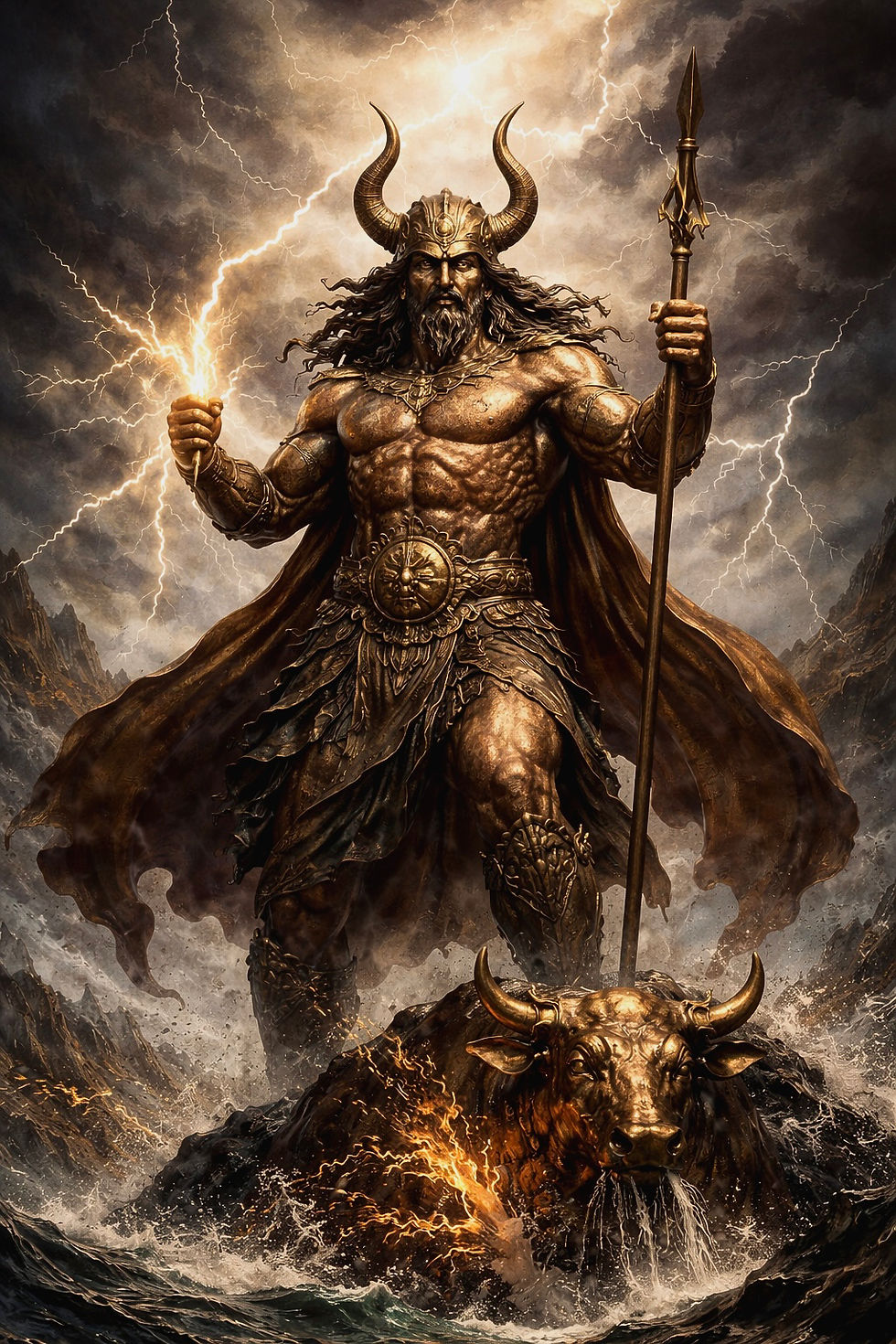
“Baal” did not begin as a single, clearly defined deity. The word itself simply meant “lord” or “master” in ancient Semitic languages. It could refer to a landowner, a ruler, or a divine figure. In early usage, it functioned more like a title than a personal name.
Over time, however, this title became attached to specific gods in different regions. As local traditions developed, “Baal” shifted from a general label into the identity of particular deities, each tied to their own city, landscape, and people.
The Rise of a Storm God
The most prominent figure associated with this title is Baal Hadad.
He emerged in the ancient Near East, particularly among the Canaanites, as a storm and fertility god. In a world where survival depended heavily on rainfall, a god who controlled storms was not just important, but essential.
Baal Hadad was believed to:
Bring rain to nourish crops
Command thunder and lightning
Ensure fertility of land and livestock
Without rain, there was famine. With it, there was life. Baal stood at that crossroads.
Myth and Meaning
Baal’s mythology reflects the natural cycles people depended on.
He is said to battle Yam, representing chaotic waters, and later confront Mot, symbolizing drought and sterility.
These stories were not just entertainment. They were symbolic explanations for:
Seasonal change
The struggle between life and death
The unpredictability of nature
When Baal triumphed, the rains returned. When he fell, drought followed.
A Regional Powerhouse
Baal was not confined to one place. Variations of his worship appeared across the ancient Levant, including areas that are now part of modern-day Syria, Lebanon, and Israel.
Different cities had their own version of Baal, sometimes with local attributes or paired with other deities. This made Baal both a shared and a localized figure, familiar yet distinct depending on where you stood.
From Revered to Rejected
As religious traditions evolved, particularly with the rise of exclusive worship of Yahweh, Baal’s role changed dramatically.
In the Hebrew Bible, Baal is no longer a life-giving force, but a rival. Worship of Baal is portrayed as misguided or dangerous, and stories emphasize the conflict between his followers and those devoted to Yahweh.
This shift reflects a broader transformation:
From a world of many gods
To a system centered on one
In that transition, former gods like Baal were not simply forgotten. They were redefined.
The Legacy of Baal
Baal’s story is not just about a single deity. It is about how belief systems evolve.
He began as a title, became a powerful storm god, and later transformed into a symbol of opposition within a new religious framework. His journey reflects the shifting values, needs, and identities of the people who told his story.
In the end, Baal stands as a reminder that gods are not only shaped by nature, but also by the narratives of those who worship, challenge, and reinterpret them over time.

Comments